
North Central Region of the Astronomical League
2026 Conference
May 15-17, 2026
Cedar Rapids, IA
Advanced Astronomy for NCRAL Members
Track 1 is the annual conference of the North Central Region of the Astronomical
League (NCRAL), running all day Saturday, May 16, 2026, with pre-conference
activities on Friday evening and optional tours on Sunday. Attendees will enjoy
presentations from highly-qualified speakers, educational exhibits, an astrophotography
contest, door prizes, and a formal banquet. The conference begins with a business
meeting to elect officers and set the direction for the coming year. Track 1 is designed
for those seeking advanced academic content and networking opportunities.
Friday May 15th, 2026
3:00-4:30 PM Welcome, DoubleTree Hotel and Convention Complex
5:00 PM EIOLC Convergence and Registration at the EIOLC
Catered meal (Cost included in Track 1 Registration fee)
Networking
Visit Displays
Visit Telescopes
7:30 PM Welcome and Introductions
Chris Kardos, President Cedar Amateur Astronomers
8:00 PM Networking/Panels/Workshops/Swap Meet/Fun/Games
9:00 PM Outside Viewing
Outdoor Viewing Pads
Outdoor Planetarium
Laser Pointers and Drone Photos
Saturday May 16th, 2026
Breakfast On Your Own
8:00 AM Introductions and logistics
8:05 AM NCRAL Business meeting
9:15 AM Dr. Ryan French
The Sun: How to Live Under a Star
10:15 AM Dr. Jasper Halekas
To Touch the Sun: The Parker Solar Probe
Lunch On Your Own
1:30 PM Video Welcome by Mayor Tiffany O’Donnell
1:45 PM Dr. Allison Jaynes
Nature’s Light Show: the Physics of the Aurora
2:35 PM Cookie Break
3:00 PM Dr. Charles Kerton
Stars forming Stars: Fact or Fiction
4:00 PM Dr. Charlotte Christensen
Proper Care and Keeping of Galaxies
Social and Networking Time
Note: Following each presentation a Meet the Mentor
area will be set up outside Ballroom C in the Lantern area
of the Hotel
5:30 PM Cash Bar and Social Hour
6:00 PM Banquet-Taft Ballroom B
7:30 PM Sean Walker: Keynote Address
Genesis of an Amateur Sky Survey
8:45 PM NCRAL Awards
10:00 PM Conference Decompression
Hospitality Suite, Room 1500
Sunday 5/17/2026
8:00 AM Collins Aerospace Museum Tour
10:45-11:15 National Czech and Slovak Museum and Library with Astronomical Orloj visit
12:00 PM NRAO VLBA Site Visit
1:00 PM Van Allen Space Physics Lab Tour
Speakers
Meet the Experts
Our lineup includes leading astronomers and experts who will share their knowledge on various topics. Dive deep into the cosmos with engaging talks.
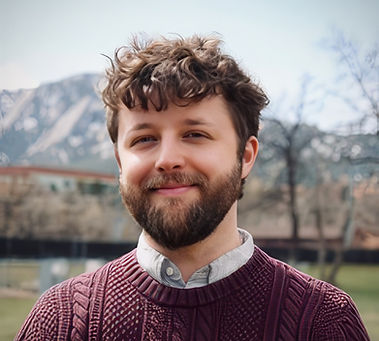
Dr. Ryan French, our Harlow Shapley Lecturer, is a solar astrophysicist, science communicator and author, currently working at the Laboratory for Atmospheric and Space Physics (LASP) at the
University of Colorado, Boulder. He is pursuing the mysteries of the Sun at the forefront of modern solar physics research, using cutting edge telescopes on the ground and in space. Ryan also works to share the wonders of the Sun and space with the public, through books, social media, public talks, and interviews on television and radio. His second book, “Space Hazards”, was published in 2025.
The Sun: How to live under a star
Despite its seemingly unchanging appearance in the daytime sky, the Sun is incredibly dynamic and shrouded in mystery. Descended from ancestors who hailed the Sun as a deity, the way we observe the Sun has come a long way. Our scientific journey to understand the Sun has included many intriguing and humorous stories from over the centuries, including tales of 11th century monks, feuds of 17th century astronomers, and a part-time brewery owner who discovered the link between the Sun and northern lights. Built on centuries of research, we know today that the Sun is not a uniform ball in the sky, but a nuclear reactor producing ever-changing sunspots, solar flares and coronal mass ejections. The influence of the Sun’s activity on the near-Earth environment is known as space weather, which has the ability to damage satellites, disrupt power grids, and deliver harmful levels of radiation to astronauts. In this talk, we’ll explore what humanity has learnt from living under a star, and how our understanding of the Sun has helped unlock the wider secrets of the universe.

Jasper S. Halekas, Ph.D.
University of Iowa
Scientific Interests:
-
Space plasma instrumentation, focusing on charged particle measurement techniques
-
Solar wind origin, acceleration, and evolution from the Sun to the outer solar system
-
Planetary magnetic fields and magnetospheres
-
Atmospheric escape from terrestrial planets
-
Composition and dynamics of planetary exospheres
-
Moon-plasma interactions throughout the solar system
-
Plasma wakes and sheaths
To Touch the Sun: The Parker Solar Probe
The solar wind is a supersonic flow of hot ionized gas - or plasma - from the Sun that streams throughout our solar system. The solar wind, first predicted by Eugene Parker in 1958 a few years before its direct detection, is the main driver of space weather at the Earth, including the aurora that you’ll hear about from our other speaker. Despite its fundamental importance, many unanswered questions remain about the solar wind. What energy sources heat the corona to millions of degrees and accelerate the solar wind to speeds of millions of miles per hour? What are the structure and dynamics of the Sun’s magnetic fields and how do these affect the release of the solar wind? What causes extreme solar wind events, such as coronal mass ejections? Since the first prediction and discovery of the solar wind, we have dreamed of sending a probe close to the Sun to answer these questions. The Parker Solar Probe is that mission. I will describe the mission’s conception and execution, and show a few of the exciting new scientific results from Parker Solar Probe.
Dr. Halekas was personally involved in the early design, build, and testing of the PSP plasma instrumentation while at U.C. Berkeley. At Iowa he has maintained a strong science role in the mission with his own work and that of Prof. Greg Howes.

Allison Jaynes, Ph.D.
University of Iowa
Research Interests:
-
Experimental space physics
-
Inner magnetosphere and radiation belts particle dynamics, particularly high-energy electrons and protons
-
The physics of the aurora in Earth’s ionosphere
-
Relativistic particle effects throughout the magnetosphere in the vicinity of magnetic reconnection
-
Solar driving of the near-Earth space environment
-
Co-Investigator on NASA’s Van Allen Probes and MMS missions
-
Hardware and instrument development focused on the above science questions
Nature’s Light Show: the Physics of the Aurora
Diligent sky watchers thrill at the prospect of seeing the aurora - that rare phenomenon that, unlike the stars, shows itself only transiently outside of the arctic regions. As an auroral scientist and night-sky enthusiast, my passion for studying aurora extends to a passion for communicating its cause and effects on planet Earth. In this talk, I will guide us through the physics that cause the sky to glow with vibrant colors — from solar winds and magnetic fields to atmospheric interactions. Ever wondered if the colors indicate something specific? Or if you might be able to see aurora from your backyard? I will explain the scientific cause of different colors and types of aurora and provide a guidebook on how to have the best chance at observing this otherworldly light show with your own eyes and cameras - especially relevant for the continuing activity of our current solar cycle. Amateur aurora-watchers have been instrumental in our evolving understanding of the science behind auroras and I will cover some new and ongoing work that citizen science has initiated.

Charles Kerton, Ph.D.
Iowa State University
Scientific Interests:
-
Massive star formation
-
Interstellar medium physics
-
Radio and infrared astronomy surveys
-
Development of citizen science projects
Stars forming Stars: Fact or Fiction
Triggered star formation is simply star formation resulting from the compression of a gas/dust cloud due to the influence of a nearby star. Computer simulations suggest that this process should occur, but it is very challenging to actually observe it in action. This talk will describe a study of a small star-forming region that provides some of the best observational evidence that this process does occur in nature. At this talk, you'll get to see how astronomers use radio observations to identify regions likely to form stars, and how they use infrared observations to identify and classify newly formed stars. As a bonus you'll also get to hear about some really big rockets!

Charlotte Christensen, Ph.D.
Grinnell College
Scientific Interests:
-
Star formation and quenching of dwarf galaxies
-
Gas accretion and expulsion from galaxies
-
Traces of the assembly history of galaxies within the stellar halo
-
Detailed simulation of galaxy formation and evolution
The Proper Care and Keeping of Galaxies: The Role of a Stimulating Environment
A new era of discovery is unfolding in astronomy. The recently-launched James Webb Space Telescope has revealed observations of the earliest galaxies in the Universe, showing how galaxies evolved from clouds of gas to the vast stellar structures we see today. Meanwhile, the Legacy Survey of Space and Time is beginning a sweeping, weekly scan of the entire sky, delivering an unprecedented view of our own cosmic neighborhood. Galaxies in the present day span an astonishing range—from giant ellipticals filled with ancient stars to miniature galaxies orbiting much larger companions.
Our own Milky Way galaxy provides our cosmic environment--the stellar and gaseous surroundings within which the Sun and the Solar System were able to form and life on Earth evolved. Understanding how it and other galaxies were shaped is, therefore, part of our origin story. What drives the tremendous diversity of galaxies? Modern astronomy reveals that a galaxy’s story is shaped not just by its internal properties but also by the environment it grows up in and the interactions it has with other galaxies. In this talk, I will show how new observations in concert with cutting-edge simulations allow us to trace the life histories of galaxies--revealing how their surroundings, encounters, and mergers determine their evolution, their contents, and the stars they create.

Sean Walker
Associate Editor of Sky and Telescope
Sean Walker is an Associate Editor at Sky & Telescope Magazine specializing in astro-imaging techniques. A classically trained artist, he graduated from Massachusetts College of Art and Design in 1996 with a Bachelor of Fine Arts in Painting while spending any clear night pursuing comets, galaxies, and star clusters using any optic he could commandeer to achieve his goals.
Genesis of an Amateur Sky Survey
Sky & Telescope Associate Editor Sean Walker shares the story of the development and current progress of the MDW Sky Survey, an all-sky mapping project undertaken by a trio of amateurs including David Mittelman, Dennis di Cicco using a trio of remotely operated telescopes currently situated in both the northern and southern hemispheres. Sean will detail how the survey operates, several discoveries the team has contributed to, and the public release of the data in partnership with Columbia University and the Mittelman Family Foundation.


