Weather Balloon Launch
The Metro High School STEAM Academy Team
Come see and learn what is involved with weather balloon planning, preparation and launch processes
Learn how they will track the balloon's flight and recover it
Learn how they do photography from the balloon
9:30 AM Balloon Launch Prep
At the LivingLearning Roof of the Cedar Rapids Public Library
10:00 AM Weather Balloon Launch
At the LivingLearning Roof of the Cedar Rapids Public Library
Harlow Shapley Visiting Lectures Program
Ryan French, MSci, PhD
Space Hazards
Laboratory for Atmospheric and Space Physics (LASP), Boulder, CO
Sponsored by the American Astronomical Society’s
Harlow Shapley Visiting Lectures Program
Free and Open to the Public
10:45 AM, Taft Ballroom A/B
Join us for a free, open-to-the-public lecture by a renowned expert, courtesy of the American Astronomical Association’s Harlow Shapley Lecturer program. This special event will be held at approximately 10:45 AM on Saturday, May 16, and is open to everyone, regardless of conference registration status.
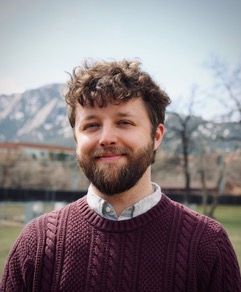
Ryan French – Shapley Visiting Lecture Program
Dr. Ryan French is a solar astrophysicist, science communicator and author, currently working at the Laboratory for Atmospheric and Space Physics (LASP) at the University of Colorado, Boulder. He is pursuing the mysteries of the Sun at the forefront of modern solar physics research, using cutting edge telescopes on the ground and in space. Ryan also works to share the wonders of the Sun and space with the public, through books, social media, public talks, and interviews on television and radio. His second book, “Space Hazards”, published in 2025.
Space Hazards (solar flares, asteroids and beyond)
Our planet may seem peaceful, but space is full of potential dangers. Surrounded by
objects and forces that pose serious risk, Earth is under constant threat. In this talk,
based on Ryan’s new book ‘Space Hazards’, we’ll explore the most fascinating of
these threats – ranging from the immediate, to cosmically unlikely. From the science
behind the Sun and solar flares, asteroids and meteorites, to the growing cloud of
space debris orbiting our planet, we’ll discuss what we know, what we’re watching,
and how experts around the world are working to keep us safe.

NASA Engages Program
Dominic Benford, PhD
Exoplanets
Chief Technologist and Program Scientist
Astrophysics Division
NASA Headquarters
Washington, DC
Free and Open to the Public
11:45 AM, Taft Ballroom A/B
We are privileged to welcome a leading NASA scientist right on the heels of the successful Artemis II mission, NASA's first return of astronauts to the Moon in over 50 years. This visit is provided by the NASA Engages Program. This special presentation will be held at approximately 11:45 AM on Saturday, May 16, and is open to everyone, regardless of conference registration status.

NASA’s Program Scientist for the
Nancy Grace Roman Space Telescope
“People have been gazing into the night sky for all of history and before. To us, the universe is mostly dark and static. Over eons, though, it has been changing in ways both large and small. Large, in that the cosmic web of galaxy clusters has been coalescing and collapsing to leave voids a hundred million light years across. Small, in that individual planets have been forming by the billions in solar systems throughout our galaxy. When I was born, we didn’t know these things. Soon, we will understand not just the past, but the future of our universe, and whether the conditions for life exist elsewhere out there. We have only to gaze into the night sky a little more.”